

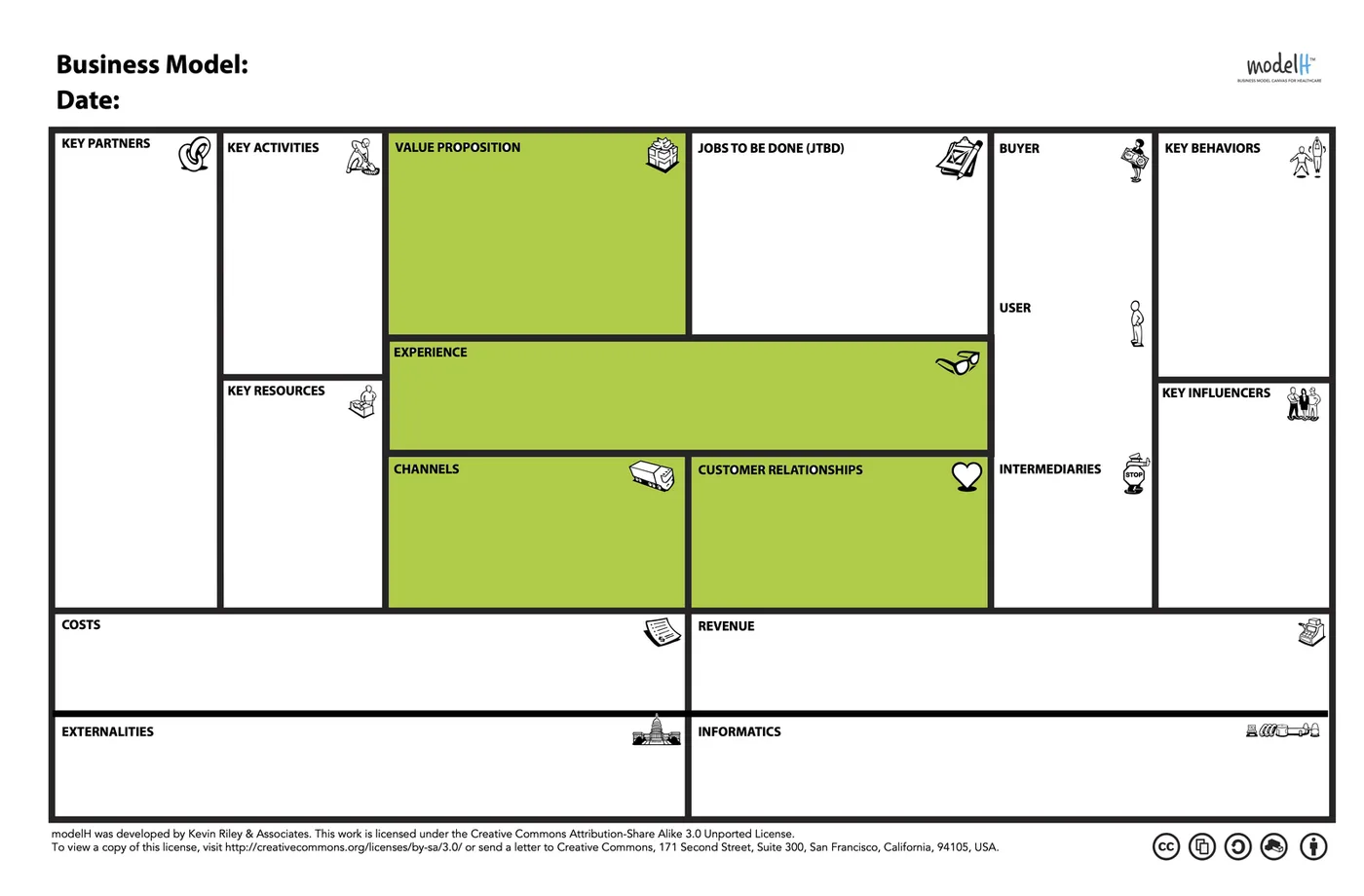
modelH Business Model Placemat: The What
We have now completed the What of the modelH canvas. Here is how the four blocks work together, and what we learned.
- Value Propositions are what you promise.
- Experience is how that promise feels.
- Channels are how it arrives.
- Customer Relationships are who stands behind it over time.
A gap in any one of them breaks the rest. A great promise delivered through a terrible portal is not a great promise.
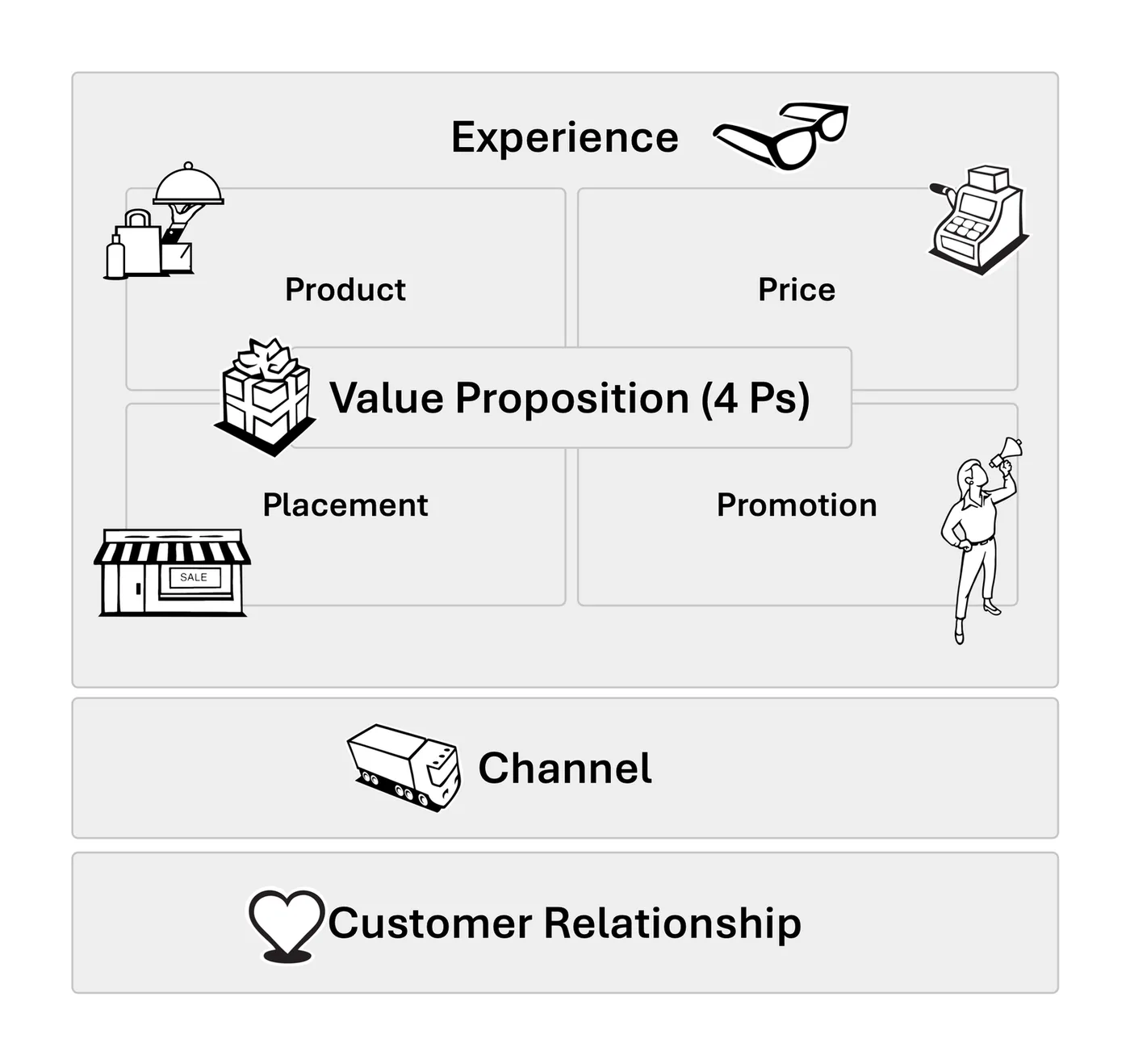
modelH: Value Propositions, Experience, Channels, and Customer Relationships
What We Learned
- Experience. Your bar is now set by the best AI your customer uses. Measure resolution, and connect it to money.
- Journey Maps, Storyboards, and Blueprints. Add an autonomy line and always draw the failure path.
- Channels. The AI assistant is a discovery channel. The EHR is a gatekeeper. Agents need to be able to use you.
- Channel Threading. Same customer, same data, same message, and do not let private data travel where it should not.
- Customer Relationships. Decide using consequence and emotion. Be honest about the difference between attention and care.
The Big Idea
AI will make the What much easier to copy. A competitor can match your features and may match your interface. What remains harder to copy is the evidence behind your promise, the trust built through your relationships, and access to your Channels.
That is why I spent so many posts on the softer-looking blocks. In an AI market, they are the hard ones.
A Short Exercise
Take your top Customer Segment and write one sentence for each.
- We promise ___.
- It feels like ___.
- It reaches them through ___.
- When it goes wrong, ___ answers for it.
Then show it to a customer. If they laugh, you have work to do.
What is Next?
We move to the How: Key Activities, Key Resources, Key Partners, and Informatics. This is where AI does its most visible damage to the old org chart.
to your health,
Kevin