

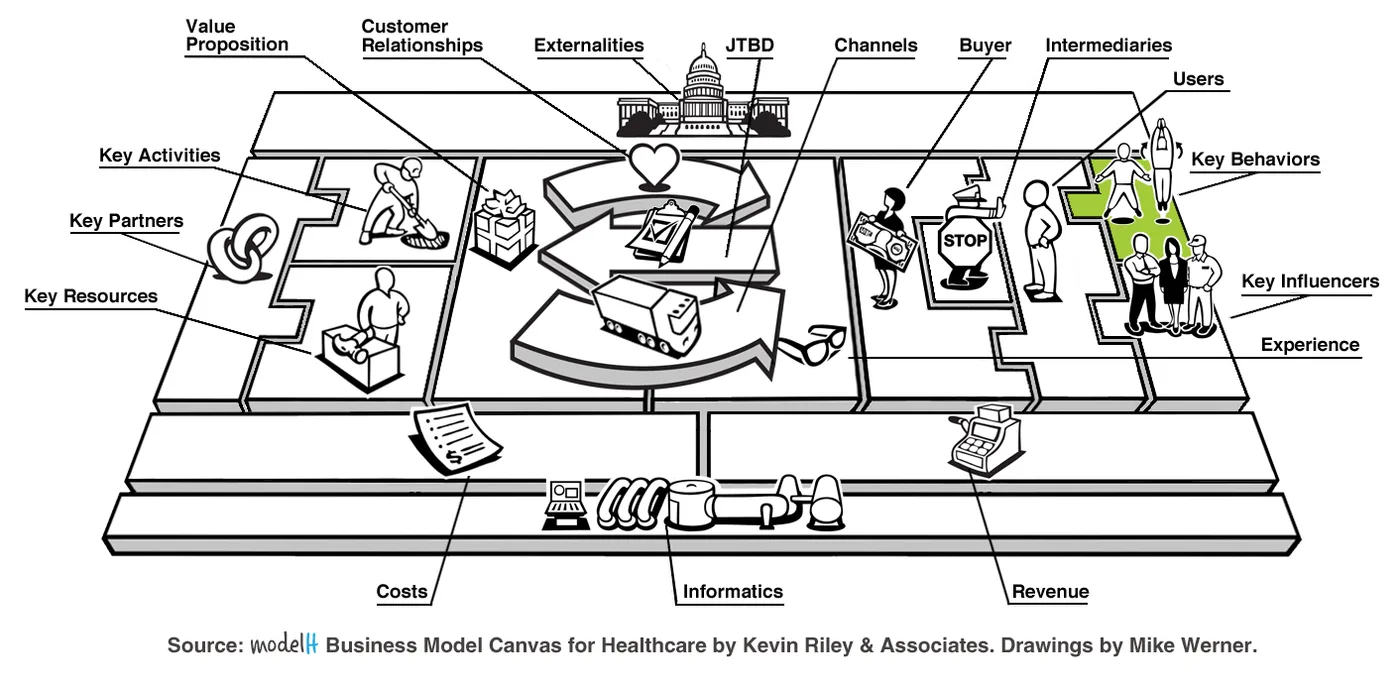
modelH Business Model Canvas: Key Behaviors
Key Behaviors are the steps required from the User to complete their JTBD. Behavior sits at the heart of any healthcare business model, and it is tough to change. Try it yourself. For models that rely on healthy customers to make a profit, this is a problem. For models that drive behavior change, it is a bonus.
Users are human, and humans act irrationally. Fortunately, the science of behavioral design can guide us. Choices may not be logical, but they are usually predictable.
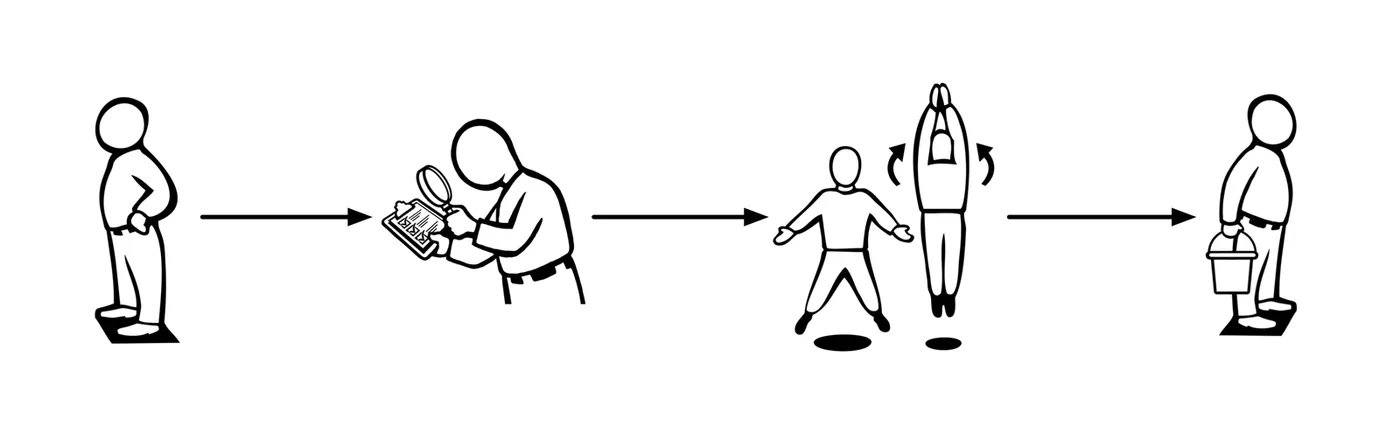
modelH Diagram: Key Behaviors
Questions for the Key Behaviors Block
- What Key Behaviors are required for the Buyer and User to complete their JTBD?
- What negative behaviors must the User overcome?
- Which result from your business model, and how can they be removed?
- How difficult will adoption be?
- Which require stimulus from Key Influencers?
- Which are affected by Intermediaries, and how?
- What behavior change models will you use?
- What behavioral economics principles apply?
- What rewards and incentives apply?
The modelH Method
1. Enumerate the Key Behaviors
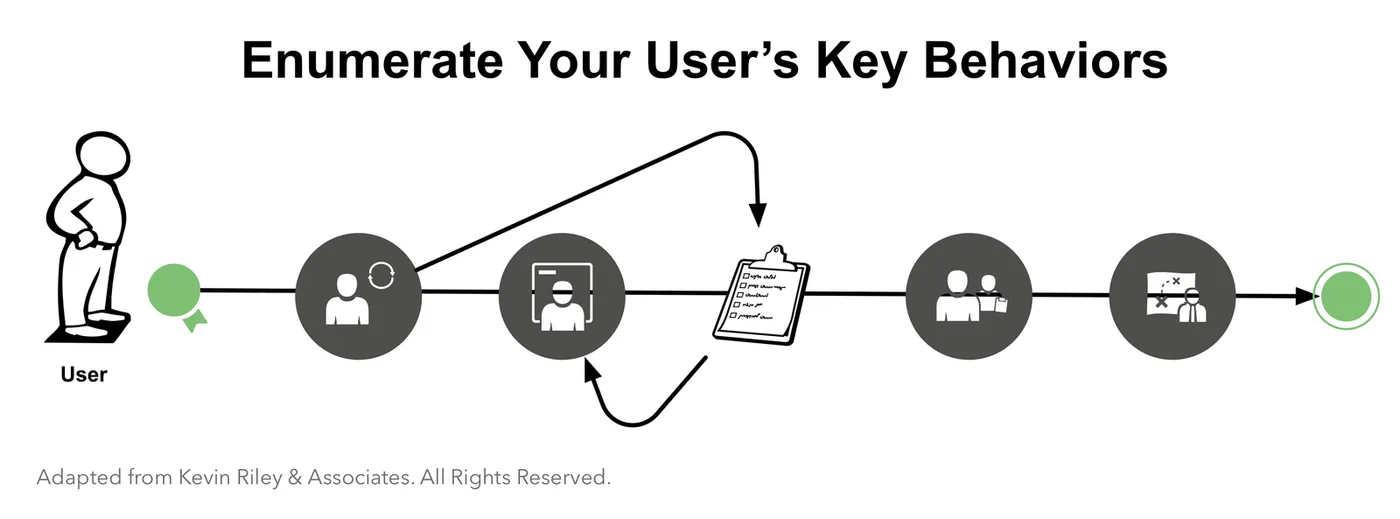
Map what the User must do before, during, and after their JTBD, as a flow or journey. Separate what you can influence directly from what must come through others. Remember that refusing to change is also a behavior. Be honest about the negative stimuli your own model creates, such as confusing bills and hard-to-use portals. Principles like choice architecture, hyperbolic discounting, optimism bias, and loss aversion explain many of them.
2. Apply a Behavior Change Model
There is no one-size-fits-all model. Choose what fits the behavior and context.
- Expectancy Theory, Vroom
- Persuasive Design, Fogg
- Self-Efficacy, Bandura
- Theory of Planned Behavior, Fishbein and Ajzen
- Stages of Change, Prochaska
- Hierarchy of Needs, Maslow
3. Build Behavior Triggers into Key Activities
Define what your company must do to prompt each behavior. We cover this in the Key Activities post.
4. Reward and Reinforce
Rewards need not be costly. Combine partner-funded rewards, discounts, rebates, multi-purchase deals, and gamification principles such as appointments, status, progress, and shared discovery.
What AI Changes
The cost of a personal nudge falls toward zero. Timing, tone, reading level, and language can now adjust per person. A coach's conversation can reach people who could never afford a coach. In the Fogg model, AI can make the prompt better and the task easier. Motivation remains the hard part.
Friction disappears from some behaviors. If an agent can find the provider, book the visit, and handle the paperwork, you no longer need the User to do those things. Remove every Key Behavior that exists only because your model is hard to use. This is the fastest win on this block.
The remaining behaviors matter more. Nobody can outsource eating well, taking a medication, or keeping an appointment. And early results across digital health should keep us humble: engagement often fades when the novelty wears off, a pattern I have seen with every generation of health technology. Do not assume a chatty interface solves that. Ask for the evidence at 12 months, not at 12 weeks.
New behaviors appear. Users must learn when to trust AI and when to call a person. With consumers letting chatbot advice influence whether they seek care, that is now a behavior you need to design for. A worrying one is over-reliance, along with the clinician's version, automation bias, where people stop checking the machine. Build in the check.
The ethics get sharper. Persuasion at this scale can tip into manipulation, especially with sick, scared, or lonely people. If your model profits when someone stays in a conversation rather than when they get well, you have an incentive problem. Design for their JTBD, and measure the outcome.
New Questions for 2026
- Which Key Behaviors can we eliminate by having AI do the work?
- Which must stay human, and how will AI support them?
- What durable evidence shows our AI changes behavior over time?
- How do we teach appropriate trust and guard against over-reliance?
- Does our business benefit from engagement or from outcomes?
What is Next?
Next, we look at Key Influencers.
to your health,
Kevin