

A better experience comes from immersing your customer in an orchestrated journey, then listening at each moment of truth. Three tools help you design one, and none of them requires a design degree.
Journey Mapping
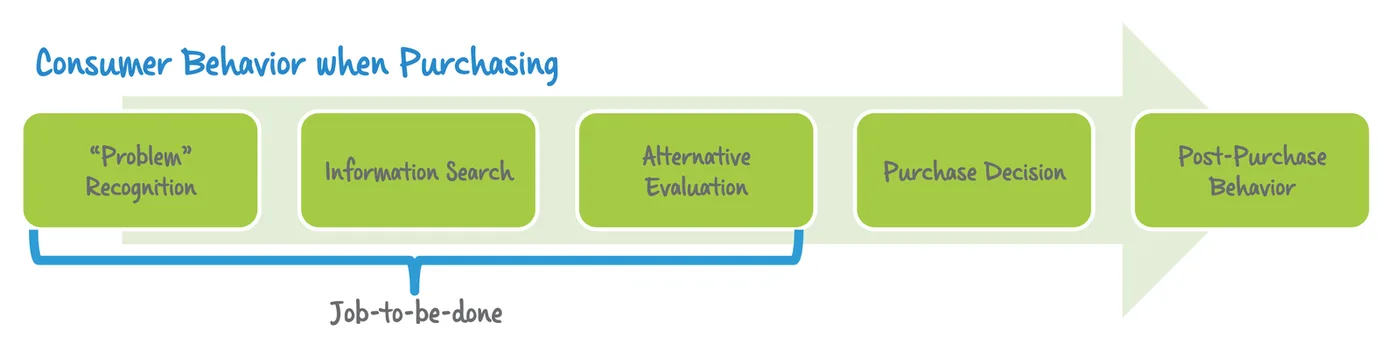
modelH: Consumer Purchase Journey
A journey map is a simple diagram of the steps a customer goes through with your company, whether that is a product, a retail visit, or a clinical encounter. In healthcare, map the purchase and the use. Too many companies spend their effort on the sale and ignore what follows.
For each stage, capture four things.
- Actions: what is the customer doing?
- Motivations: why keep going, and how do they feel?
- Questions: what is uncertain or confusing?
- Barriers: what stands in the way?
Then map what your company does at each stage. Think of two axes. The horizontal is the customer's path. The vertical is who inside your company and your partners enables it: those working directly with the customer, those who support them, and those running systems underneath.
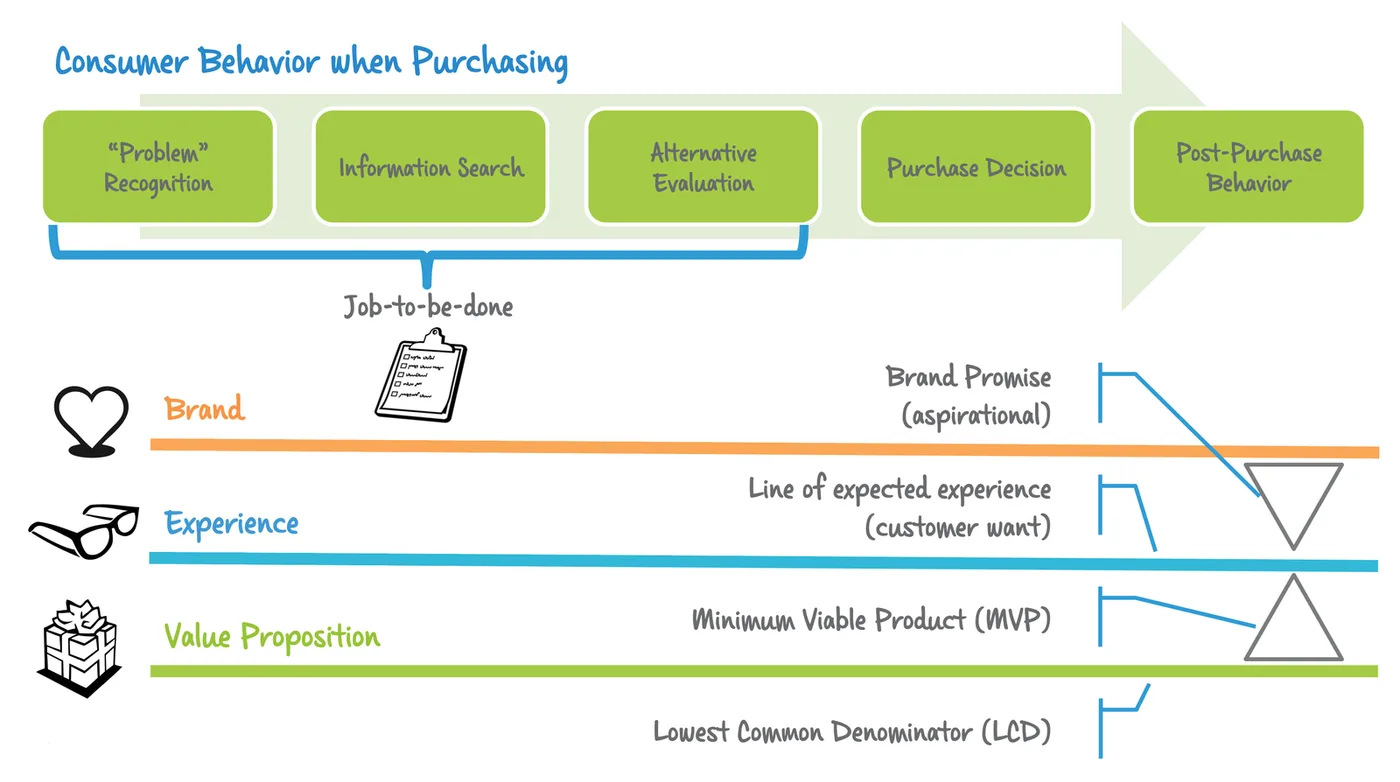
modelH: Consumer Behavior when Purchasing
Hassle Maps
Customer experience is often improved more by removing hassles than by adding delights. List every hassle in the journey. Which ones cost the customer time, money, or confidence? Fix those first.
Storyboards
A storyboard tells the journey as a sequence of simple pictures, the way a film is planned. It forces you to think about a real person in a real moment, and it is cheap to change. Stick figures are fine.
Draw the good path, then draw what happens when something goes wrong. In healthcare, the failure path is often where trust is won or lost.
Service Blueprints
A service blueprint goes beneath the journey map. It shows the points of customer contact, the physical evidence, and the supporting systems needed underneath. It gives the organization a common view of the service and its processes, and it shows where one department's convenience becomes the customer's problem.
Doing the Work
- Choose one Persona and one JTBD.
- Build the map from real interviews and observation.
- Mark hassles and bonuses, then score each by value and cost.
- Draw the storyboard for the good path and the failure path.
- Blueprint the priority moment.
- Test with customers and front-line staff.
- Measure the result, then repeat.
What is Next?
Next, we turn to Channels.
to your health,
Kevin